Valentine de Villefort
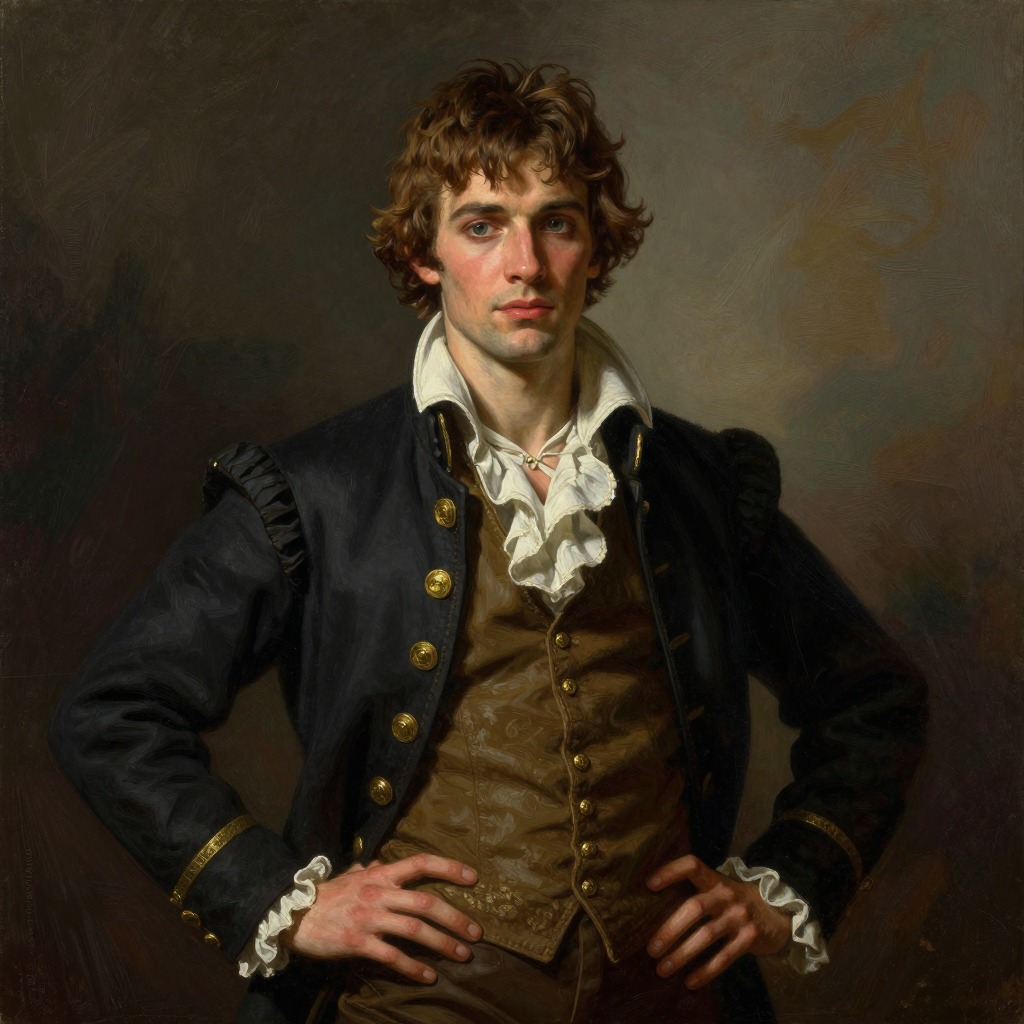
Valentine de Villefort is the daughter of Gérard de Villefort, the king's attorney, by his first wife, Renée de Saint-Meran. She is a tall, graceful girl of nineteen, with chestnut hair, deep blue eyes, and a quiet, melancholy dignity that sets her apart from the brittle society around her. Orphaned of her mother at a young age, she lives in the gloomy Villefort mansion on the Faubourg Saint-Honoré, where she is the sole companion and devoted caretaker of her paralyzed grandfather, Noirtier de Villefort, communicating with him through a system of eye movements and an alphabet board. Her stepmother, Heloise de Villefort, resents her for the large fortune she will inherit from the Saint-Meran and Noirtier families, a fortune that would otherwise pass to Heloise's own son, Edward.
Life in the Villefort Household and Secret Love
Valentine's life is one of quiet oppression. Her father is cold and distant, absorbed in his career; her stepmother masks a deep hatred beneath a veneer of politeness; and her only true allies are her grandfather and, secretly, Maximilian Morrel, a captain of Spahis whom she loves. Their meetings take place through a boarded gate in the garden, where they exchange whispered vows and promises. Valentine is betrothed against her will to Franz d'Epinay, a match her father and grandmother, the Marquise de Saint-Meran, have arranged. She confides her misery to Morrel, telling him she would rather enter a convent than marry Franz, but she feels powerless to defy her family. Her grandfather Noirtier, who can communicate only with his eyes, becomes her staunchest protector; when he learns of the forced engagement, he dictates a new will disinheriting Valentine if she marries Franz, and later reveals a terrible secret that breaks the match entirely.
The Poisoning and Apparent Death
A series of sudden deaths strikes the Villefort household: the Marquis and Marquise de Saint-Meran, and the old servant Barrois, all die under suspicious circumstances. Doctor d'Avrigny suspects poisoning and warns Villefort, but the culprit remains hidden. Valentine herself begins to feel unwell, suffering from giddiness and a bitter taste in her mouth. Unknown to her, her stepmother Heloise is systematically poisoning her, using brucine—the same substance d'Avrigny has been giving Noirtier as medicine—to make the deaths appear natural. Noirtier, suspecting the danger, has been sharing his own gradually habituated doses with Valentine, thereby building her resistance. When Heloise administers a fatal dose of a different narcotic, Valentine falls into a deathlike coma. Doctor d'Avrigny pronounces her dead, and her body is laid out for burial.
Rescue and Reunion
The Count of Monte Cristo, who has been secretly watching over Valentine at Morrel's desperate request, has anticipated the murder. On the night of her apparent death, he enters her room through a hidden door, substitutes a life-preserving elixir for the poison, and spirits her away to his island of Monte Cristo. There she is revived and kept in seclusion, believing herself dead to the world. When Maximilian Morrel, grief-stricken and resolved to die, arrives at Monte Cristo on the appointed day, the count orchestrates a final test of his faith. As Morrel swallows what he believes is poison, Valentine appears before him, alive and radiant. The lovers are reunited, and Monte Cristo gives them his blessing, along with a vast fortune as a wedding gift.
Thematic Significance
Valentine embodies the innocent victim caught in the crossfire of Monte Cristo's vengeance against her father, Villefort. Her suffering is not caused by her own sins but by the crimes of her family, illustrating the novel's theme that the sins of the fathers fall upon the children. Her rescue by Monte Cristo marks a turning point in his own moral journey: having destroyed his enemies, he chooses to save rather than destroy, and in restoring Valentine to life and love, he finds his own redemption. Her story arc—from passive, obedient daughter to active agent of her own fate, willing to elope with Morrel—also reflects a quiet rebellion against patriarchal authority. Her final words, echoing Monte Cristo's own philosophy, are "Wait and hope."